Saturday, May 11, 2019

The Big Bang Theory: A CBS TV SHOW OR Edgar Allan Poe's Brilliant Idea?

The Big Bang Theory is a show on CBS, correct?


Well, not exactly, it goes far further back than you might realize and it has a surprising founding father, Edgar Allan Poe!


Related image

“The willing into being the primordial particle, has completed the act, or more properly the conception, of Creation. We now proceed to the ultimate purpose for which we are to suppose the Particle created – that is to say, the ultimate purpose so far as our considerations yet enable us to see it – the constitution of the Universe from it, the Particle."

"This constitution has been effected by forcing the originally and therefore normally One into the abnormal condition of Many…. From the one Particle, as a centre, let us suppose to be irradiated spherically – in all directions – to immeasurable but still to definite distances in the previously vacant space – a certain inexpressibly great yet limited number of unimaginably yet not infinitely minute atoms.”

Edgar Allan Poe in "Eureka!" (1848) 


Author T.S. Eliot wrote a criticism of Poe's Eureka. " makes no deep impression, because we are aware of Poe's lack of qualification in philosophy, theology or natural science."

ONLY PROBLEM, T.S., Edgar Allen Poe was RIGHT and a GENIUS! And you were 100% WRONG! 

Poe's mind was by no means commonplace. In the last year of his life, 1848, he wrote a prose poem, Eureka, which would have established this fact beyond doubt—if it had not been so full of intuitive insight that neither his contemporaries nor subsequent generations, at least until the late twentieth century, could make any sense of it. Its very brilliance made it an object of ridicule, an instance of affectation and delusion, and so it is regarded to this day among readers and critics who are not at all abreast of contemporary physics. Eureka describes the origins of the universe in a single particle, from which "radiated" the atoms of which all matter is made. Minute dissimilarities of size and distribution among these atoms meant that the effects of gravity caused them to accumulate as matter, forming the physical universe. The New York Times Book Review

Poe's own estimation, he had written something that was more than a daydream. In a letter he penned in 1848, he said of Eureka, "What I have propounded will in good time revolutionize the world of Physical and Metaphysical Science, I say this calmly - but I say it."

Image result for "big bang theory" edgar allen poe 


Books about Space use this photo of the Andromeda Galaxy as a primary illustration because it is a near perfect example of our near neighbor. 

Image result for "big bang theory" "edgar Allan Poe"

The Big Bang
In 1922, Russian mathematician Alexander Friedmann proposed on theoretical grounds that the universe is expanding, which was derived independently and observationally confirmed soon afterwards by Belgian astronomer and Catholic priest Georges Lemaître in 1927.  Lemaître also proposed what became known as the "Big Bang theory" of the creation of the universe, originally calling it the "hypothesis of the primeval atom," in his paper Annales de la Société Scientifique de Bruxelles (Annals of the Scientific Society of Brussels) under the title "Un Univers homogène de masse constante et de rayon croissant rendant compte de la vitesse radiale des nébuleuses extragalactiques" ("A homogeneous Universe of constant mass and growing radius accounting for the radial velocity of extragalactic nebulae"), he presented his new idea that the universe is expanding and provided the first observational estimation of what is known as the Hubble constant. What later will be known as the "Big Bang theory" of the origin of the universe, he called his "hypothesis of the primeval atom" or the "Cosmic Egg". 
American astronomer Edwin Hubble observed that the distances to faraway galaxies were strongly correlated with their redshifts. This was interpreted to mean that all distant galaxies and clusters are receding away from our vantage point with an apparent velocity proportional to their distance: that is, the farther they are, the faster they move away from us, regardless of direction. 


Image result for "big bang theory" penzias wilson at&t

In 1964, two AT&T scientists, Arno Penzias(R) and Robert Wilson(L), were studying radio waves using a shoehorn radio wave detector aimed into deep space, when they noticed an anomaly, back ground radiation, with no discernible cause, radiating in all directions. It was at that moment that "The Big Bang Theory" was proven, because that is exactly what scientist had predicted would happen if the theory were true. 

All of Sheldon's research into String Theory and Dark Matter is derived from Edgar Allan Poe's Eureka Moment!

The Raven

Did you know that originally Poe intended his poem to be called The Parrot but felt, quite rightly,  that choice betrayed the solemnity of his poem. Then he happily learned that Raven could mimic human speech too. 

Image result for "the raven" "edgar allan poe" manuscript


Once upon a midnight dreary, while I pondered, weak and weary,
Over many a quaint and curious volume of forgotten lore—
    While I nodded, nearly napping, suddenly there came a tapping,
As of some one gently rapping, rapping at my chamber door.
“’Tis some visitor,” I muttered, “tapping at my chamber door—
            Only this and nothing more.”

    Ah, distinctly I remember it was in the bleak December;
And each separate dying ember wrought its ghost upon the floor.
    Eagerly I wished the morrow;—vainly I had sought to borrow
    From my books surcease of sorrow—sorrow for the lost Lenore—
For the rare and radiant maiden whom the angels name Lenore—
            Nameless here for evermore.

    And the silken, sad, uncertain rustling of each purple curtain
Thrilled me—filled me with fantastic terrors never felt before;
    So that now, to still the beating of my heart, I stood repeating
    “’Tis some visitor entreating entrance at my chamber door—
Some late visitor entreating entrance at my chamber door;—
            This it is and nothing more.”

    Presently my soul grew stronger; hesitating then no longer,
“Sir,” said I, “or Madam, truly your forgiveness I implore;
    But the fact is I was napping, and so gently you came rapping,
    And so faintly you came tapping, tapping at my chamber door,
That I scarce was sure I heard you”—here I opened wide the door;—
            Darkness there and nothing more.

    Deep into that darkness peering, long I stood there wondering, fearing,
Doubting, dreaming dreams no mortal ever dared to dream before;
    But the silence was unbroken, and the stillness gave no token,
    And the only word there spoken was the whispered word, “Lenore?”
This I whispered, and an echo murmured back the word, “Lenore!”—
            Merely this and nothing more.

    Back into the chamber turning, all my soul within me burning,
Soon again I heard a tapping somewhat louder than before.
    “Surely,” said I, “surely that is something at my window lattice;
      Let me see, then, what thereat is, and this mystery explore—
Let my heart be still a moment and this mystery explore;—
            ’Tis the wind and nothing more!”

    Open here I flung the shutter, when, with many a flirt and flutter,
In there stepped a stately Raven of the saintly days of yore;
    Not the least obeisance made he; not a minute stopped or stayed he;
    But, with mien of lord or lady, perched above my chamber door—
Perched upon a bust of Pallas just above my chamber door—
            Perched, and sat, and nothing more.

Then this ebony bird beguiling my sad fancy into smiling,
By the grave and stern decorum of the countenance it wore,
“Though thy crest be shorn and shaven, thou,” I said, “art sure no craven,
Ghastly grim and ancient Raven wandering from the Nightly shore—
Tell me what thy lordly name is on the Night’s Plutonian shore!”
            Quoth the Raven “Nevermore.”

    Much I marvelled this ungainly fowl to hear discourse so plainly,
Though its answer little meaning—little relevancy bore;
    For we cannot help agreeing that no living human being
    Ever yet was blessed with seeing bird above his chamber door—
Bird or beast upon the sculptured bust above his chamber door,
            With such name as “Nevermore.”

    But the Raven, sitting lonely on the placid bust, spoke only
That one word, as if his soul in that one word he did outpour.
    Nothing farther then he uttered—not a feather then he fluttered—
    Till I scarcely more than muttered “Other friends have flown before—
On the morrow he will leave me, as my Hopes have flown before.”
            Then the bird said “Nevermore.”

    Startled at the stillness broken by reply so aptly spoken,
“Doubtless,” said I, “what it utters is its only stock and store
    Caught from some unhappy master whom unmerciful Disaster
    Followed fast and followed faster till his songs one burden bore—
Till the dirges of his Hope that melancholy burden bore
            Of ‘Never—nevermore’.”

    But the Raven still beguiling all my fancy into smiling,
Straight I wheeled a cushioned seat in front of bird, and bust and door;
    Then, upon the velvet sinking, I betook myself to linking
    Fancy unto fancy, thinking what this ominous bird of yore—
What this grim, ungainly, ghastly, gaunt, and ominous bird of yore
            Meant in croaking “Nevermore.”

    This I sat engaged in guessing, but no syllable expressing
To the fowl whose fiery eyes now burned into my bosom’s core;
    This and more I sat divining, with my head at ease reclining
    On the cushion’s velvet lining that the lamp-light gloated o’er,
But whose velvet-violet lining with the lamp-light gloating o’er,
            She shall press, ah, nevermore!

    Then, methought, the air grew denser, perfumed from an unseen censer
Swung by Seraphim whose foot-falls tinkled on the tufted floor.
    “Wretch,” I cried, “thy God hath lent thee—by these angels he hath sent thee
    Respite—respite and nepenthe from thy memories of Lenore;
Quaff, oh quaff this kind nepenthe and forget this lost Lenore!”
            Quoth the Raven “Nevermore.”

    “Prophet!” said I, “thing of evil!—prophet still, if bird or devil!—
Whether Tempter sent, or whether tempest tossed thee here ashore,
    Desolate yet all undaunted, on this desert land enchanted—
    On this home by Horror haunted—tell me truly, I implore—
Is there—is there balm in Gilead?—tell me—tell me, I implore!”
            Quoth the Raven “Nevermore.”

    “Prophet!” said I, “thing of evil!—prophet still, if bird or devil!
By that Heaven that bends above us—by that God we both adore—
    Tell this soul with sorrow laden if, within the distant Aidenn,
    It shall clasp a sainted maiden whom the angels name Lenore—
Clasp a rare and radiant maiden whom the angels name Lenore.”
            Quoth the Raven “Nevermore.”

    “Be that word our sign of parting, bird or fiend!” I shrieked, upstarting—
“Get thee back into the tempest and the Night’s Plutonian shore!
    Leave no black plume as a token of that lie thy soul hath spoken!
    Leave my loneliness unbroken!—quit the bust above my door!
Take thy beak from out my heart, and take thy form from off my door!”
            Quoth the Raven “Nevermore.”

    And the Raven, never flitting, still is sitting, still is sitting
On the pallid bust of Pallas just above my chamber door;
    And his eyes have all the seeming of a demon’s that is dreaming,
    And the lamp-light o’er him streaming throws his shadow on the floor;
And my soul from out that shadow that lies floating on the floor
            Shall be lifted—nevermore!

But that is nothing compared to this story by Edgar Allan Poe, Rod Serling would say Wow.

The Narrative of Arthur Gordon Pym of Nantucket by Edgar Allan Poe (1838)


Before we proceed, this is the "grave" of 17-year-old Richard Parker. He was part of the crew of a small yacht, the Mignonette, which sailed from England to Sydney Australia in 1884. The boat was far too small for such a long journey. A storm hit and the yacht sank, a 1000 miles off the coast of Argentina, the four man crew included Dudley the Captain, Stephens the 1st Mate, Brooks a Sailor and Richard Parker the Cabin Boy made it to the lifeboat, with hardly any provisions. One can of Turnips lasted only hours, a turtle the caught a few days. After 8 days of starving, the men realized they were in danger of starving to death. They had no fresh water. Parker, the youngest of the crew became delirious with thirst and tried to drink seawater, the salt from which only made matters worse. At this point the men, were pushed far beyond human endurance. They made the decision that on man would have to sacrifice himself for his other crew mates. Since Richard Parker was in by far the worst shape, delirious and irrational, the men decided he would have to sacrifice himself as their only source of food, so they could live. 
The remaining men were rescued on the 24th day after the sinking, but were arrested and put on trial. Charged with murder, Dudley and Stephens, they were in command and were found guilty of murder and sentenced to hang, on appeal this was effectively changed the sentence to manslaughter and the men were given 6 months sentences. 
Townspeople paid for this cenotaph for the young boy "lost at sea".  

In 1838, Edgar Allan Poe published his only full length novel, "The Narrative of Arthur Gordon Pym of Nantucket." A ship called Grampus is sinking, they have lost all provisions, no food or water. They four man crew manage to catch a tortoise and strip off its shell which provides sustenance lasting a few days. But they reach the point where the crew must draw lots to figure out which of them will be sacrificed to provide food for the rest. The death straw goes to a young ship hand named Richard Parker, who is promptly killed, sustaining them all, barely, until they are rescued. 


The Cenotaph of Richard Parker (1867-1884) a victim of cannibalism at sea, echoing the Edgar Allan Poe story The Narrative of Gordon Pym written in 1838, which included the story of shipwrecked sailors surviving on a dinghy, forced to eat one of their fellow crewman, their youngest companion, teenager Richard Parker. 


Image result for futility robertson titanic titan

SS Titanic on her maiden voyage


The photo up top was taken by the chief steward of the German ocean liner SS Prinz Adalbert on April 15, 1912. The Prinz Adalbert was sailing off the coast of Newfoundland near the last reported position of the Titanic before she sank on April 14th. What drew the steward's attention to this iceberg was its base, just above sea level, which had a long deep red streak on its side at the water line. This was before he knew anything about the Titanic sinking. 


 In 1898, author Morgan Robertson wrote a book titled "Futility" 

Both of the ships were triple screw (propeller) ships.
Both the Titan and the Titanic were described as being "unsinkable" The Titan was the largest craft afloat and the greatest ship ever built to date, having 800 feet, displacing 75,000 tons, up from 45,000 in the 1898 edition...
Both the fictional ship the Titan and the Titanic had a shortage of lifeboats
        - The Titanic carried 16 lifeboats, plus 4 Engelhardt folding lifeboats, which was less than the required for the crew and passenger capacity of 3000.
        - According to the book, the Titan carried "as few as the law allowed", 24 lifeboats, which could carry less than half of her total complement of 3000.


Both ships struck an iceberg
        - The titanic struck the iceberg moving at 22½ knots on the starboard side on the night of April 14, 1912, in the North Atlantic, 400 nautical miles (740 km; 460 mi) away from Newfoundland.
        - The titan also struck an iceberg moving at 25 knots, curiously also on the starboard side on an April night in the North Atlantic, 400 nautical miles (740 km; 460 mi) from Newfoundland.

Both ships sank, even though they were described as unsinkable.
        - The Titanic sank, and more than half of her 2200 passengers and crew died.
        - The Titan also sank, and more than half of her 2500 passengers drowned.

The Titan and the Titanic were both 400 miles from Newfoundland!  Robertson did have a talent of predicting the future as he also predicted another real-life event. Robertson is also credited with predicting the Japanese attack on Pearl Harbor in World War II in his novel 1914 "Beyond the spectrum."

Morgan Robertson wrote another short story in 1914, in a volume that also contained a new version of Futility, Robertson included a short story called "Beyond the Spectrum", which described a future war between the United States and the Empire of Japan. Japan does not declare war but instead launches sneak attacks on United States ships en route to the Philippines and Hawaii; an invasion fleet about to launch a surprise attack on San Francisco is stopped by the hero using the weapon from a captured Japanese vessel. The title refers to an ultraviolet searchlight used by the Japanese, but invented by the Americans, to blind American crews.

On December 7th 1941, the Japanese launched a surprise attack on the United States without declaring war at Pearl Harbor. Much like they did against Russia at Port Arthur in 1905, starting the Russo-Japanese War which Japan won. 


Battleship Row, Pearl Harbor, photo taken by a Japanese pilot on a bombing run December 7th, 1941, a date which will live in INFAMY.


Hard to tell if Morgan Robertson was a 2nd Nostradamus or simply paying attention.


Just read about Jim Fowler just passed away. Our generation was blessed with Jacques Cousteau in our oceans, Jane Goodall in our jungles, Carl Sagan in space, Rod Serling in our imagination, Marlin Perkins and Jim Fowler leading us into the outback. We were a lucky generation. Less so now... Jane Goodall take care of yourself. 


Related image

1962 Jane Goodall with her best friends


1992, Jane Goodall still with her best friends.

The Rockford Files and The Munsters

Image result for james garner rockford santos


Remembering James Garner, whose one rule, repeated by many who knew him, don’t make up your mind up about friendship with anyone based on how they treat you, they may have an Angle, decide based on how they treat the people who can do nothing for you/them. Jim would watch how you treated waitresses, waiters, car and bell hops, even the paper boy, before deciding if he wanted to be your friend. Jim was incredibly popular in Hollywood. His Cherokee Productions kept the same employees for the 25 years Rockford was on the air. When he auditioned Joe “Santos” Minieri for the role of Sergeant Dennis Becker, Jim liked Joe Immediately, the job was his.Jim had worked with Stuart Margolin on his previous show Nichols in 1970. 


I have a History Degree and love researching things. I was watching The Rockford Files/Queen of
Peru, which had dialogue which I thought was quintessentially Jim. I went to IMDb to cut and paste it, but they didn't have it, so I transcribed it myself. Then I stumbled across one of those stories which seem to come out of nowhere. In the episode young actor Michael Morgan played Sean Wronko. I recognized him from other shows on TV, but I didn't know his real story.

No photo description available.


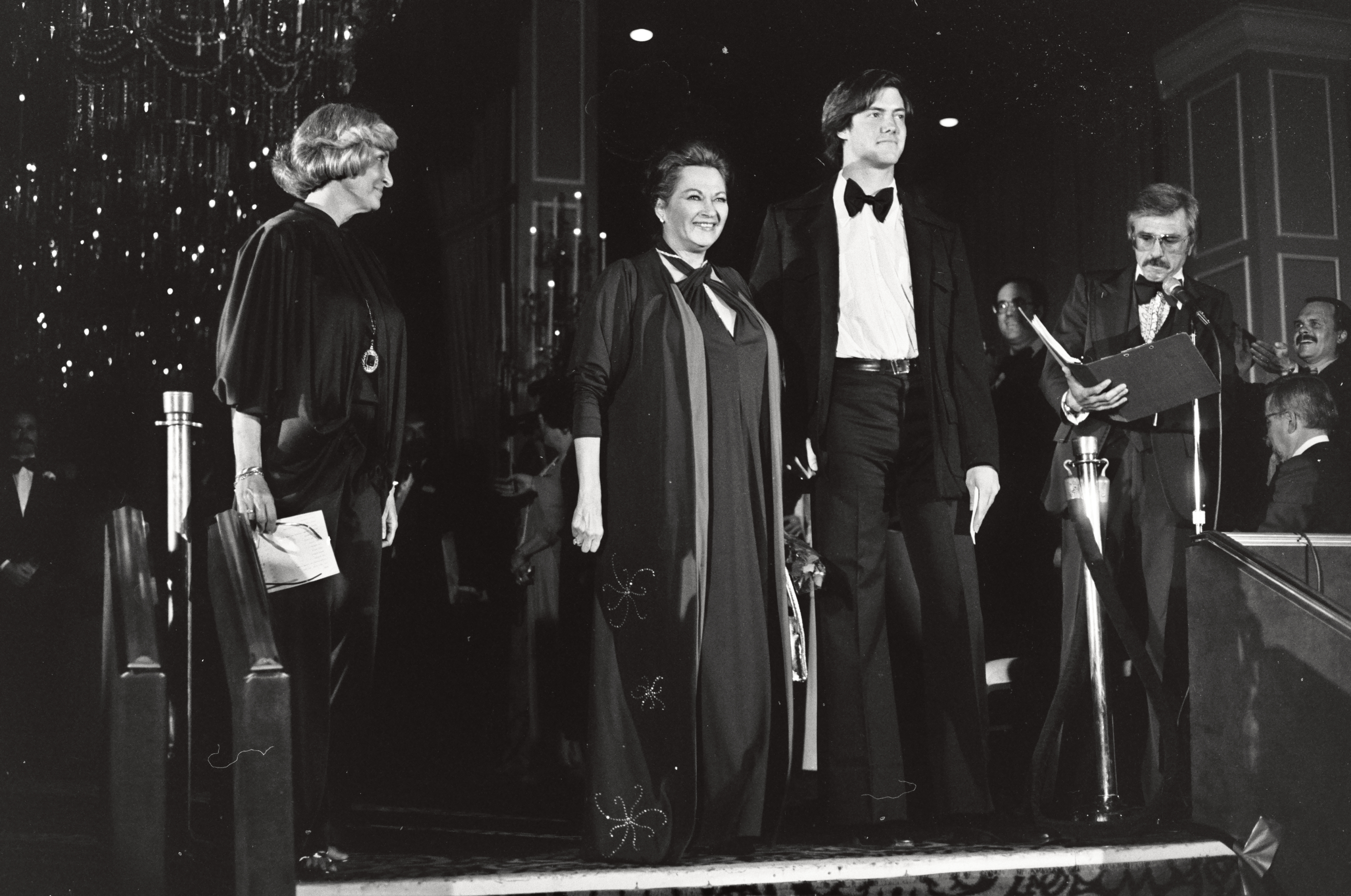
Well, I did some digging and surprised to discover the fact that Michael Morgan was the son of Yvonne "Lily Munster" De Carlo and was born on October 29, 1959. I remembered seeing him on episodes of Little House on the Prairie, CHIPS, etc.  Michael was a soft spoken, gentle, intelligent young actor. Watching Rockford's Queen of Peru prompted me to find out what happened to him. Horrifically, I was shocked to find out Michael was murdered, suffering a beating which caused a cerebral hemorrhage, on February 15, 1999.A case, which Larry Wilcox of CHIPS indicates remains unsolved. As if that wasn't enough, his brother Bruce, worked in the Twin Towers and was killed on 9/11. There is a footnote to this story. Apparently, the 9/11 story may have been attributed to Michael Murphy's family.

Michael Morgan, who played Alex in today's CHiPs episode on MeTV (The Best of Families) is the son of Yvonne DeCarlo, beloved for her role as Lily Munster. Sadly, he was murdered in 1999 at at age of 39. Police have yet to solve the case. Just as sad, his on screen brother in the episode, Timothy Patrick Murphy, died of AIDs in 1988 at the age of 29. His brother, Patrick Sean was killed a few years later in the 9/11 attacks. He worked in the World Trade Center---Sue   https://www.facebook.com/Wilcox7M3/posts/10152664299518450


 As if that wasn't enough, her husband stuntman Bob Morgan, was seriously injured while filming How The West Was Won(1962). Bob lost a leg and sight in one eye. Yvonne took the role of Lily Munster to help pay Bob's medical bills.
If you are near someone you love, more so if you are not, give them a call or hug, you could lose them in a heartbeat.

Image result for "the rockford files" "queen of peru"

Yvonne De Carlo with Al Lewis who played Grandpa, Butch Patrick as son Eddie and Fred Gwynne as Herman Munster. After filming "My Cousin Vinny,"  Fred Gwynne worked in his Maryland garden, when his little girl heard Fred chasing a mole away using rather colorful language. A few months later, he was talking at dinner with his wife and daughter, saying he was getting a mole on his nose, one look at his daughter gave birth to a writer of children's books. 


Image may contain: one or more people

Image result for "yvonne de carlo" "Michael Morgan"


Michael in one of his first acting jobs, with Howard Cosell in an episode of Jack Klugman/Tony Randall's "The Odd Couple"(1972)


Margaret Yvonne Middleton was born in Vancouver, British Columbia, Canada, September 1, 1922 – January 8, 2007 dying of a stroke; Yvonne and Bob Morgan were married from November 21, 1955 until 1974. 

Related image

Requiescat in pacem, pal. Michael Morgan 1959-1999

Princess Diana said she had a debt as a child who was bullied when she was young to help other kids. Diana was shy and gentle, her parents had a vicious divorce which only made things worse. At boarding school, she was the number one target of school bullies. Diana said it taught her what her mission in life should be, she became a school teacher. There weren't and aren't many millionaire school teachers, but Diana was one of them. Diana said that bullies most often target the gentlest among us. She said it is our duty when we see a kid like Michael Morgan, to mentor them so that they will have a long, meaningful, happy life. If you choose to follow her path, do it in memory of Diana and Michael.


Thursday, May 9, 2019

Heroes tell the Truth to POWER, Ames Mayfield and August Landmesser

August Landmesser (May 24 1910 - October 17, 1944) was a worker at the Blohm+Vossshipyard in Hamburg, Germany. He is believed to be the man appearing in this 1936 photograph, conspicuously refusing to perform the Nazi salute with his co-workers. Landmesser had run afoul of the Nazi Party for his violation of the Nazi Race Laws because of his engagement to Irma Eckler, a Jewish woman. He was imprisoned and eventually drafted into military service, where he was killed in action. His fiance Irma Eckler was sent to a concentration camp where she was murdered by the Nazis.

Image result for august landmesser meme


Colorado Republican State Senator Vicki Marble pushed through the Colorado Legislature a law to allow men and women who beat their wives, husbands and children, to continue to own guns. Police will tell you that someone is far more likely to be killed in a domestic dispute than a criminal act. She also appeared to justify cuts to Medicaid, which provides Medical coverage to the poor and elderly, by saying the high cost was the result of behaviors like eating Fried Chicken and BBQ which causes things like Diabetes. A point lost on no one, though she did attempt misdirection by accusing the left-wing press of misinterpreting her words. We all know exactly what she meant. The only thing missing was watermelon from her speech.


Ames Mayfield, a 11-year-old fifth-grader at Prospect Ridge Academy, asked Colorado State Senator Vicki Marble questions about gun control and her 2013 comments regarding cuts in Medicaid, saying: “I was astonished that you blamed black people for poor health and poverty because of all the chicken and barbecue they eat.” 

“I was shocked that you co-sponsored a bill to allow domestic violence offenders to continue to own a gun. Why on earth would you want somebody who beats their wife to have access to a gun?” 


Former Arizona Congresswoman Gabby Giffords said that she would one day campaign for Ames. “This is exactly the kind of courage we need in Congress,” Giffords, a Democrat, said in a tweet Thursday. “Ames, call me in 14 years.” 


No happy, good kid should be punished for speaking the truth to power. Ames was kicked out of his pack by his Republican Scoutmaster.  But Samantha Bee decided she would make it up to the young man and had him on her show. Ames should be teaching a course on morals and ethics. https://www.youtube.com/watch?v=5HYm5LGAVjc


Ames remains loyal to the Scouts despite what's happened. He switched dens and the new den is excited to have him, according to Mayfield’s mother. And they should be. Just last month, Ames sold the most popcorn among his former pack—$2,750 worth. He sold it in two weeks time because he wanted to reach the scholarship level and help pay his scouting dues, something he said would help his mom, a single mother, in a small way. https://www.esquire.com/news-politics/a13114082/cub-scout-kicked-out-of-den/

Friday, May 3, 2019

Lizzie Borden took an AX, Murder in Fall River

Lizzie Borden took an Ax,
And gave her Mother Forty Whacks,
When she saw what she had done,
She gave her Father Forty-One.


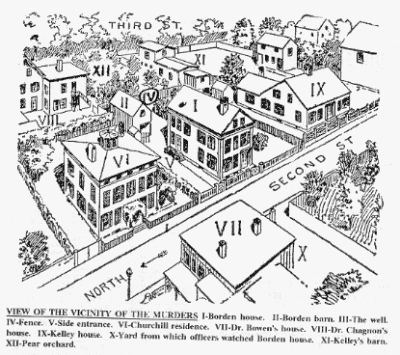
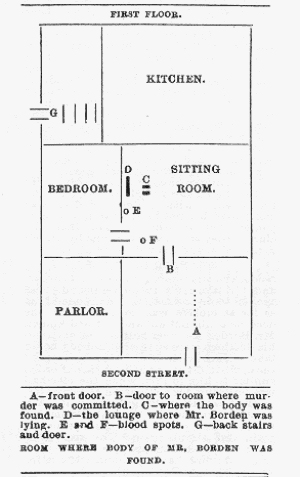
Image result for borden home diagram


Lizzie Borden was tried for the murder of her millionaire father and stepmother before an all male jury. When questioned later, these jurors said they couldn't believe a woman would use a hatchet, no one ever thought she used an ax, to murder anyone. Poison was a woman's weapon to commit murder.

Two people were in the LOCKED house at the time of the murders, other than the victims, Irish Maid Bridget Sullivan and daughter Lizzie Borden. Lizzie's stepmother was killed on the 2nd Floor their 92 Street Home at about 9:00  to 9:30 AM on August 4, 1892. It was a stifling hot day.


Image result for bridget sullivanImage result for bridget sullivan

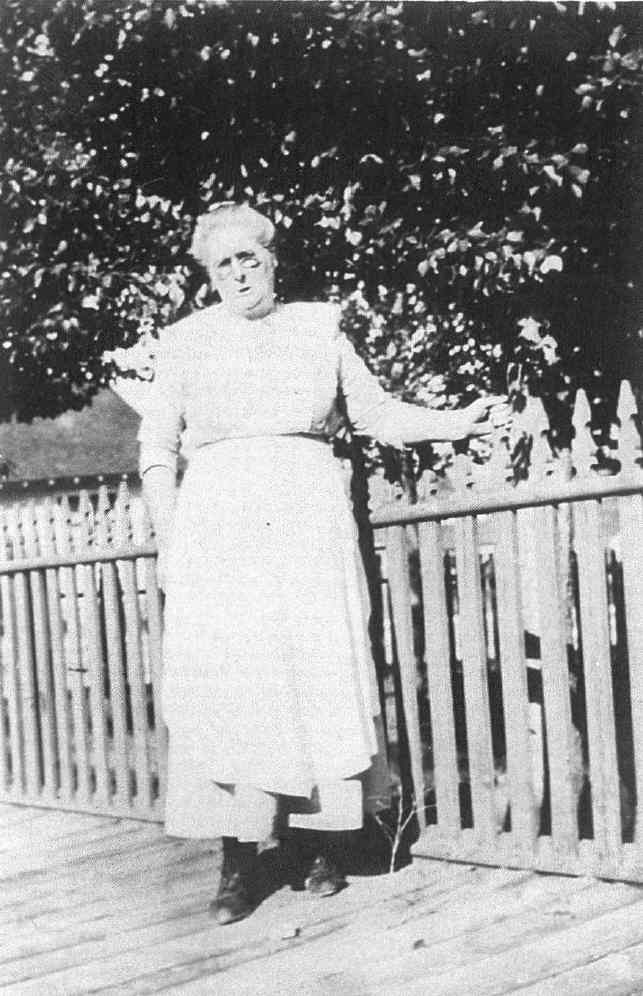
Lizzie's maid Bridget Sullivan at the time of the murder in 1892 and 40 years later in Montana.

Image result for governor george robinson

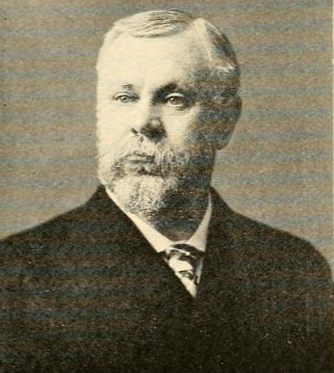
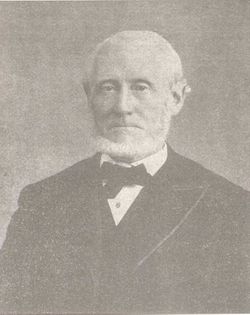
After reflecting on Lizzie's acquittal, her defense attorney was former Massachusetts Governor George Robinson, who happened to be the man who appointed the trial judge to the bench, Bridget Sullivan spoke only once about the case, telling reporters immediately after the trial.

AIN'T IT GLORIOUS TO BE  RICH! 

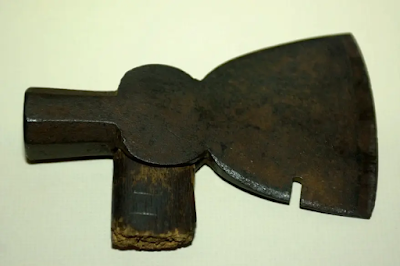
Prosecutor/District Attorney Hosea Knowlton and Fall River Town Marshall Hilliard  knew within minutes of the murder that the number one suspect had to either be Lizzie or Bridget, but they also knew that only Lizzie profited from the murder.  Police and prosecutors look for three things investigating a crime: motive, means and opportunity.  Lizzie inherited half her father's estate, roughly $125,000 at the time, the equivalent to $2,250,000 now. The suspected weapon was found downstairs in the basement. A hatchet was found in a box of tools with a broken handle. But it wasn't covered in dust, it was covered in ashes, when rinsed off, the break in the handle was shown to be recent and fresh. When Andrew Borden came home at 11 AM, the front and side doors were both locked and bolted from the inside, preventing him from getting into the house. He had to knock loudly, Bridget was on the third floor attic apartment, while Lizzie was either on the 1st or 2nd floor, her story changed repeatedly. Andrew, possibly cursing, mumbled under his breath as Bridget let him in the house. Bridget and Andrew heard Lizzie laugh from the second floor only a few feet from Abby's dead body.  

Image result for hosea knowlton


Image result for borden home diagram


Image result for borden home diagram

I went to Newport, Rhode Island in 2006, to visit my childhood home on Washington Street. Since it was only a few miles away, I visited Fall River, Massachusetts too and dropped in on the Borden house. We lived in this house on Washington Street, in the apartment on right with the red door. I remember looking out our bay window seeing JFK, Jackie and Caroline Kennedy cruising down Narragansett Sound. Once I saw a submarine surface right behind our house.


After the tour guide was through with his speech, he asked for questions and I was ready asking him a series of questions about the murder. I told him that I had read Victoria Lincoln's "Murder by Daylight" about the case. Victoria had been a child in Lizzie's neighborhood on the hill in the 1920's. She had seen Lizzie working in her garden and on her front porch many times. When she heard the other kids in the neighborhood singing the famous rhyme, Victoria went to her mother and asked what the song meant. Her Mom explained, a long time ago "Lizzie was very unkind to her mother and father."

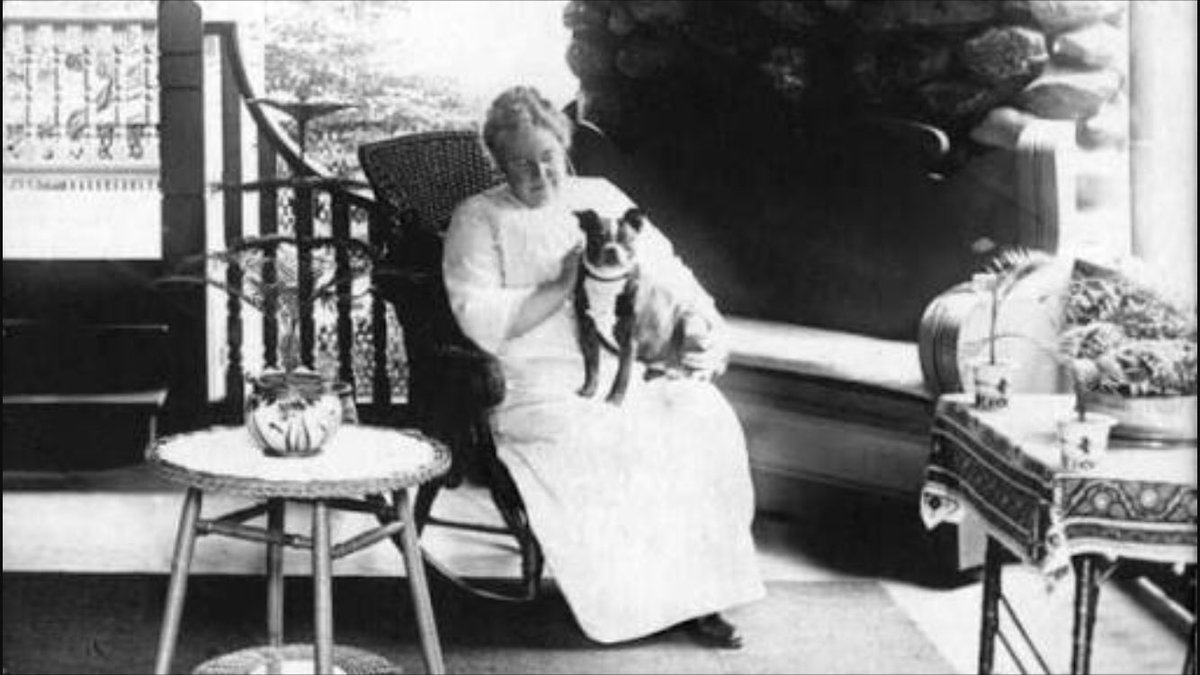
Image result for lizzie borden

Lizzie lived with her sister Emma, Dad Andrew and Stepmother Abby Durfee Gray Borden on 92nd Street. Their father had moved there in his youth before he became really rich. He was an up and coming undertaker, famous for being the cheapest one in town. As one might imagine, undercutting other mortuaries, led to stories like he cut the legs off a 6'4" man to fit him in a casket designed for a man 5'10".
Lizzie resented the fact that her father was, in 1892, on the board of almost every company and bank in town and yet they still lived in the same middle class home he had moved into with his first wife Sarah in 1845 and finally bought in the the 1871. He was one of the richest and one of the most successful men in town and was the President of one of the largest banks, but lived like he didn't.
The Borden's had an overnight house guest, Andrew's first wife, Sarah Borden's, Emma and Lizzie's Mom, brother John Vinicum Morse. Though he would have no real alibi for the murder of Abbey at 9 to 9:30 AM, he had an alibi for Andrew Borden who was killed after 11 AM.

Related image

Mrs. Churchill sent Bridget for Dr. Bowen, a good Anglo-Saxon, fit for society doctor, but he was making a house call, so Bridget brought neighbor Irish Catholic Dr. William Dolan, who happened to also be the county medical examiner. He had served during the Civil War and made a very important determination, Abby had died hours earlier. Her blood was coagulated and drying, while Andrew Borden's was fresh. Their deaths were hours apart. 


Under questioning from Town Marshall Hilliard and his men, who had interrupted the town clambake to come investigate the crime, Lizzie offered the alibi that she had been, as some point in the barn looking for wire to fix a screen, police checked, no screen had a tear in it. So she then said that she went to the barn to eat a pear from the yard, in the cool loft of the barn having left the door unlocked. Two boys who had been hanging around the crime scene after the news broke, came to Lizzie's defense team and told them they stole up to the loft to spy on the goings on. Brownie and me, Everett Brown and Thomas Barlow, both about 14/15-years-old, echoed Lizzie's testimony that it was coolest place around on that stifling hot August day. The young liars had distinguished records as juvenile delinquents and would work hard to perfect their art. They came from the poorer section of town.


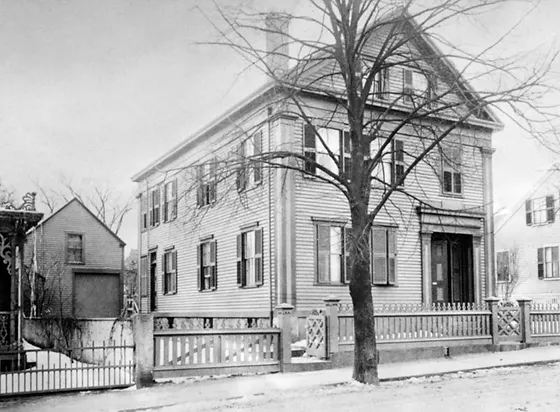
The Borden Barn can be seen to the left behind the house. It is now where Lizzie Borden House tours end and contains the gift shop.

Twot view of Lizzie Bordens' Pea TreeImage result for lizzie borden barn

To the right in this photo it the famous pear tree where Lizzie got her pears to eat them in the "cool" barn loft. When police entered the barn and went to the loft, they found the temperature stifling hot, over 100 degrees. 

"... Four months after the Borden trial Thomas Barlow and several friends were arrested on Sunday, October 8, 1893, for breaking and entering into Daniel F. Sullivan's Boots and Shoes at 40 South Main at 11 p. m. When confronted by the police at the store they were wearing shoes which had been stolen earlier from Sears and Hall Boots and Shoes at 13 Granite Block...."


Image result for marshall hilliard lizzie

Assistant Marshall Fleet the first officer on the scene said that was ridiculous. He had checked out the barn, it was stifling hot, going to the loft, found it even hotter. He also testified that the loft floor had a thick coat of dust, undisturbed by either Lizzie's or the boys' footprints. He also made the "mistake of referring to Abby as Lizzie's mother," earning a rebuke from Lizzie.
"She was not my mother, sir," Lizzie replied, "She was my stepmother: my mother died when I was a child."


Related image

The most compelling testimony came again from Alice Russell.  Russell described a visit from Lizzie the night before the murders in which she announced that she would soon be going on a vacation and felt "that something is hanging over me--I cannot tell what it is."  Then, according to Russell, after describing her parents' severe stomach sickness (which she attributed to bad "baker's bread"), Lizzie revealed, "I feel afraid something is going to happen."  Explaining her feeling, Lizzie told Russell that "she wanted to go to sleep with one eye open half the time for fear somebody might burn the house down or hurt her father because he was so discourteous to people."   Turning his questioning to the Sunday after the murders, District Attorney Moody asked Russell about the dress burning incident.  Russell recounted that when she asked Lizzie what she was doing with the blue dress, she replied, "I am going to burn this old thing up; it is covered with paint."  On cross-examination, defense attorney George Robinson attempted through his questions to suggest that a guilty person seeking to destroy incriminating evidence would be unlikely to do it in so open a fashion as Lizzie allegedly did.  Russell also recounted a conversation with Lizzie about a note, which according to Lizzie's account, she received from a messenger on the morning of the murders summoning her to visit a sick friend.  (Lizzie used the note to explain why she thought her mother had left the home and therefore didn't think to look for her body after discovering her father's. Despite  a thorough search of the Borden home, the alleged note never was found.)  Russell said she sarcastically suggested to Lizzie that her mother might have burned the note.  Lizzie, according to Russell, replied, "Yes, she must have." 


The most damaging testimony came from Lizzie close friend Alice Russell. Drawing from the Trial and a photo taken 40 years later from the old folks home. Her revelation that Lizzie burned a dress in the kitchen stoves because of "brown paint stains," while the police were repeatedly searching the home for clues is incredibly incriminating. But an all male jury, just couldn't believe a woman would commit an ax murder. Lizzie chose her weapon well. https://phayemuss.wordpress.com/2010/12/20/alice-russell-lizzie-bordens-turncoat-friend/

Chronology of the Borden Murders

December 25, 1845 Andrew Borden, 23, marries Sarah Morse and moves into a house on 92 Second St., Fall River, Massachusetts in 1845. Andrew later purchased this home in 1871
Image result for andrew bordenImage result for andrew borden sarah

March 1, 1851 Emma Borden is born, shown here with her mom.

July 19, 1860 Lizzie Andrew Borden is born.
March 26, 1863 Sarah Borden, mother of Lizzie and her older sister Emma, 12, dies.

Related image

June 6, 1865 Andrew Borden remarries. His new wife is Abby Gray, age 37. Abbey comes from prominent families who have long since fallen on hard times.

1887 Lizzie Borden stops calling her stepmother "Mother."

In 1887, Abby’s stepmother, Jane Gray, decided to sell her half of the house at 45 Fourth Street in Fall River that was handed down to her when husband Oliver Gray died. Abby’s half-sister, Sarah Bertha “Bertie” Gray Whitehead, who was thirty-six years younger than Abby and whom Abby was very close to, had lived in the house all her life. Bertie then had a husband and two young children. Bertie’s second child, George, was born in March of 1887, and the transfer was in May, which meant that her youngest was only three months old. 
It was feared that Bertie and her family would lose their home, and Abby appealed to Andrew to buy Jane Gray’s half of the house so her half-sister could retain the home. Andrew bought it and put it in Abby’s name.
The house had actually been the place of Andrew and Abby's marriage in 1865. 

Image result for abby borden house sister

When Emma and Lizzie heard what happened, they were angry. They said that what Andrew did for Abby’s people he ought to do for his own. The girls were advised to ask Andrew for a like-property, and he gave them their grandfather Borden’s house at 12 Ferry Street, which allowed them to collect rent from the tenants there.


It was this event that supposedly threw both sisters over the edge. Lizzie stopped calling Abby “Mother.” She would talk ugly about Abby to others and refer to her as “Mrs. Borden” to her face. As near to the murders as the spring of 1892, Lizzie shared some harsh words about Abby to Hannah Gifford, the dressmaker for the Borden women:
https://lizzieandrewborden.com/HatchetOnline/what-was-in-abbys-pocket.html

1889 Bridget Sullivan, an Irish immigrant, begins working at the Borden home.
June 24, 1891 Daytime robbery of cash and jewelry at the Borden home (Emma, Lizzie, and Bridget are home at time). Lizzie, who had earlier been accused of shoplifting by a local merchant, is the family's prime suspect. From this date, doors to the Borden home--inside and out--are kept locked.

April 1892 According to Hannah Gifford, a Fall River cloakmaker, Lizzie tells Gifford that Abby "is a mean old thing."

May or June 1892 Andrew Borden uses a hatchet to kill pigeons in the family barn. The pigeons roosted in a barn loft that Lizzie maintained for their benefit. Lizzie becomes hysterical over the loss.

July 21, 1892 Following a family disagreement, Lizzie and Emma Borden leave Fall River and travel to New Bedford.

August 2, 1892 Abby and Andrew Borden awaken, complaining of stomach sickness. Abby visits Dr. Bowen. She suggests that she might have been poisoned, but Dr. Bowen is skeptical.

Aug. 3, 1892: A.M.  Lizzie reportedly tries, unsuccessfully, to buy some poison from Eli Bence at D. R. Smith's drug store.

Image result for eli bence
Bence offers this testimony at the inquest, but his testimony is ruled inadmissible at trial, since this was an "ax murder" not a poisoning.

Aug. 3, 1892: P.M. John Morse arrives for a stay with the Bordens. Lizzie visits Alice Russell and talks forebodingly about household activities. She says she fears poisoning, that her father has enemies, and that she has seen suspicious characters around the family house. "I'm afraid but that someone will do something," she says.

Aug. 4, 1892: A.M. About 7 A.M., Abby, Andrew, and John Morse have breakfast. Afterwards, Morse and Andrew go to the sitting room while Abby begins her house cleaning chores. Bridget Sullivan goes to the backyard to throw up. Morse leaves about 8:45. Libby has a light breakfast about 9 A.M. A few minutes later, Andrew leaves the home, taking with him some letters that Lizzie asked him to mail.

 Aug. 4, 1892: 9:30 A.M. Abby goes up the stairs to continue her house cleaning on the second floor. Bridget Sullivan is outdoors cleaning windows for the next hour. Sometime during the next hour, Abby Borden is killed in the guest room by 19 hatchet blows to the back of her head.

Aug. 4, 1892: 11 A.M. Andrew Borden returns home carrying a small parcel. Originally he goes to the side door which is always left open and finds it locked and bolted, then he goes to the front door, which is also locked and bolted. He knocks loudly and is obviously angry and confused by the locked and bolted doors. Bridget Sullivan lets Andrew into the house as she hears laughter from upstairs, from Lizzie at the head of the stairs. Lizzie visits her father briefly in the dining room, telling him that Abby had received a message and left the house. Andrew lies down in the sitting room, and Bridget goes to rest in her attic room to lie down.
Andrew Borden is murdered shortly thereafter in the sitting room sofa. Lizzie calls for Bridget, saying someone had killed her father. Lizzie tells a neighbor, Adelaide Churchill, that she had been in the barn looking for "irons" (sinkers for an upcoming fishing trip) at the time of the murder. Shortly after 11:15, police are notified of the murders.


Addie Churchill

Aug. 4, 1892: P.M. Dozens of policemen troop in and out of the Borden home. Doctors perform a post-mortem on the bodies on the dining room table. Lizzie is interrogated by Deputy Marshal Fleet. Lizzie speaks in a detached manner and when Fleet calls Abby her mother, Lizzie insists, "She is not my mother--she is my step-mother."


Officers Harrington and Medley are the first to arrive on scene, both would later become Fall River Police Chiefs.

August 6, 1892 An editorial in the Fall River paper criticizes the police for inaction in the Borden case. A funeral service for Andrew and Abby is held at the Borden home.

August 7, 1892 Emma observes Lizzie burning her blue corduroy dress in the kitchen fire.

August 9-11, 1892 An inquest, closed to the public, is held to consider the murders of Andrew and Abby Borden. On August 11, Lizzie Borden is arrested by Marshal Hilliard.

August 12, 1892 Lizzie enters a plea of "Not Guilty." Lizzie is moved to a jail in Taunton, eight miles north of Fall River.

August 22-23, 1892 A preliminary hearing is held. Judge Josiah Blaisdell finds that there is probable cause to try Lizzie for murder.

November 31, 1892 Alice Russell tells the grand jury about the visit she received from Lizzie the night before the murders. The grand jury issues an indictment against Lizzie for murder two days later..

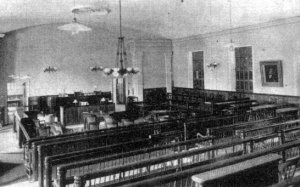
June 5, 1893 The trial of Lizzie Borden opens at the New Bedford Court-house in this courtroom.

Image result for lizzie borden barn

June 20, 1893 The jury returns its verdict in the Lizzie Borden trial: "Not Guilty."

June 1, 1927 Lizzie Borden dies at age 67. Eight days later, her sister Emma dies. Both women were buried at the family burial plot in Oak Grove Cemetery in Fall River.

Image result for lizzie borden maplecroft

Lizzie Borden at Maplecroft


Related image


Image result for lizzie borden's grave


Related image

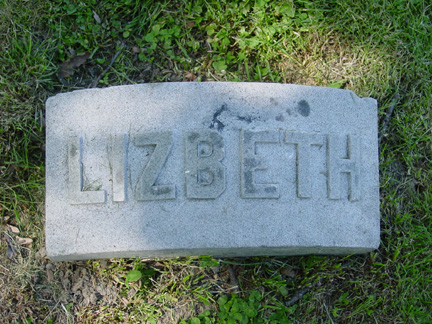
Lizzie buried in the family plot, next to her Mom and Dad, stepmother and sister Emma


https://www.famous-trials.com/lizzieborden/1441-chronology

WARNING, crime scene photos. 


Image result for lizzie borden murder photos

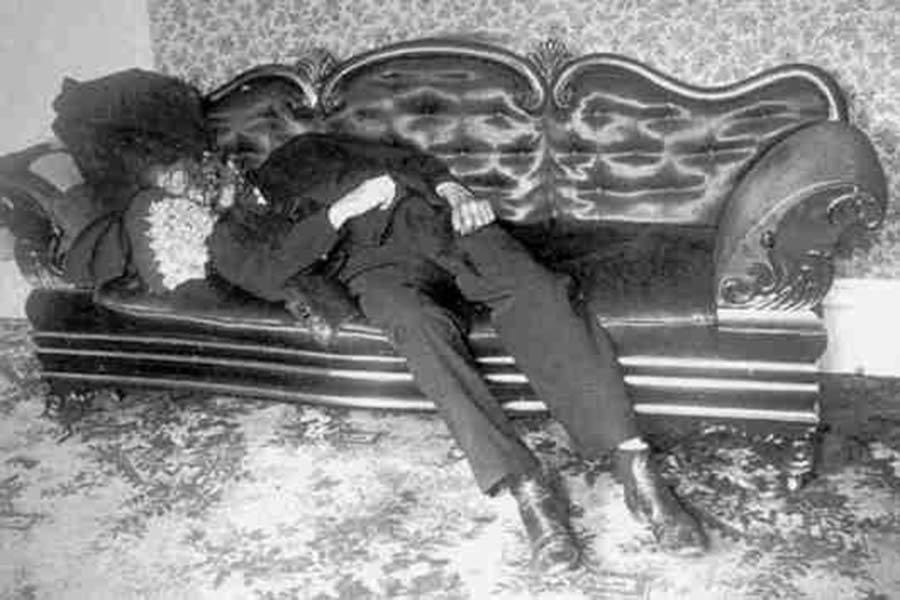
Andrew came home from his bank and lay down on the couch in the living room. He was struck from behind. Normally, he would hang up his jacket on the hangar in the entrance hall, but here it is shown rumpled and balled up below his head. One theory, Lizzie wore his jacked backwards to stop any blood from getting on her.

Image result for lizzie borden murder photos

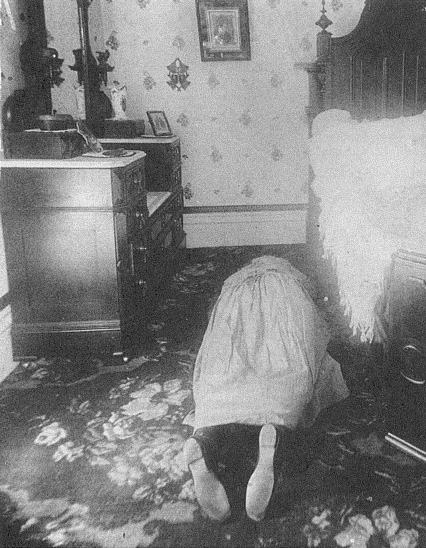
Abby was upstairs cleaning the guest room when she was attacked from behind, receiving seventeen blows from a hatchet at 9 AM. As the coroner would say the blows were not powerful, but hideously persistent.


Image result for andrew borden abbey


Image result for andrew borden abbey

Autopsy photo of Abby's shaved head, proof that the coroner was 100% right in saying the blows were weak but hideously persistent.