
Well, not exactly, it goes far further back than you might realize and it has a surprising founding father, Edgar Allan Poe!


“The willing into being the primordial particle, has completed the act, or more properly the conception, of Creation. We now proceed to the ultimate purpose for which we are to suppose the Particle created – that is to say, the ultimate purpose so far as our considerations yet enable us to see it – the constitution of the Universe from it, the Particle."
"This constitution has been effected by forcing the originally and therefore normally One into the abnormal condition of Many…. From the one Particle, as a centre, let us suppose to be irradiated spherically – in all directions – to immeasurable but still to definite distances in the previously vacant space – a certain inexpressibly great yet limited number of unimaginably yet not infinitely minute atoms.”
Edgar Allan Poe in "Eureka!" (1848)
Author T.S. Eliot wrote a criticism of Poe's Eureka. " makes no deep impression, because we are aware of Poe's lack of qualification in philosophy, theology or natural science."
ONLY PROBLEM, T.S., Edgar Allen Poe was RIGHT and a GENIUS! And you were 100% WRONG!
Poe's mind was by no means commonplace. In the last year of his life, 1848, he wrote a prose poem, Eureka, which would have established this fact beyond doubt—if it had not been so full of intuitive insight that neither his contemporaries nor subsequent generations, at least until the late twentieth century, could make any sense of it. Its very brilliance made it an object of ridicule, an instance of affectation and delusion, and so it is regarded to this day among readers and critics who are not at all abreast of contemporary physics. Eureka describes the origins of the universe in a single particle, from which "radiated" the atoms of which all matter is made. Minute dissimilarities of size and distribution among these atoms meant that the effects of gravity caused them to accumulate as matter, forming the physical universe. The New York Times Book Review
Poe's own estimation, he had written something that was more than a daydream. In a letter he penned in 1848, he said of Eureka, "What I have propounded will in good time revolutionize the world of Physical and Metaphysical Science, I say this calmly - but I say it."

Books about Space use this photo of the Andromeda Galaxy as a primary illustration because it is a near perfect example of our near neighbor.
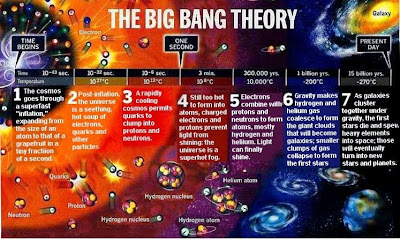
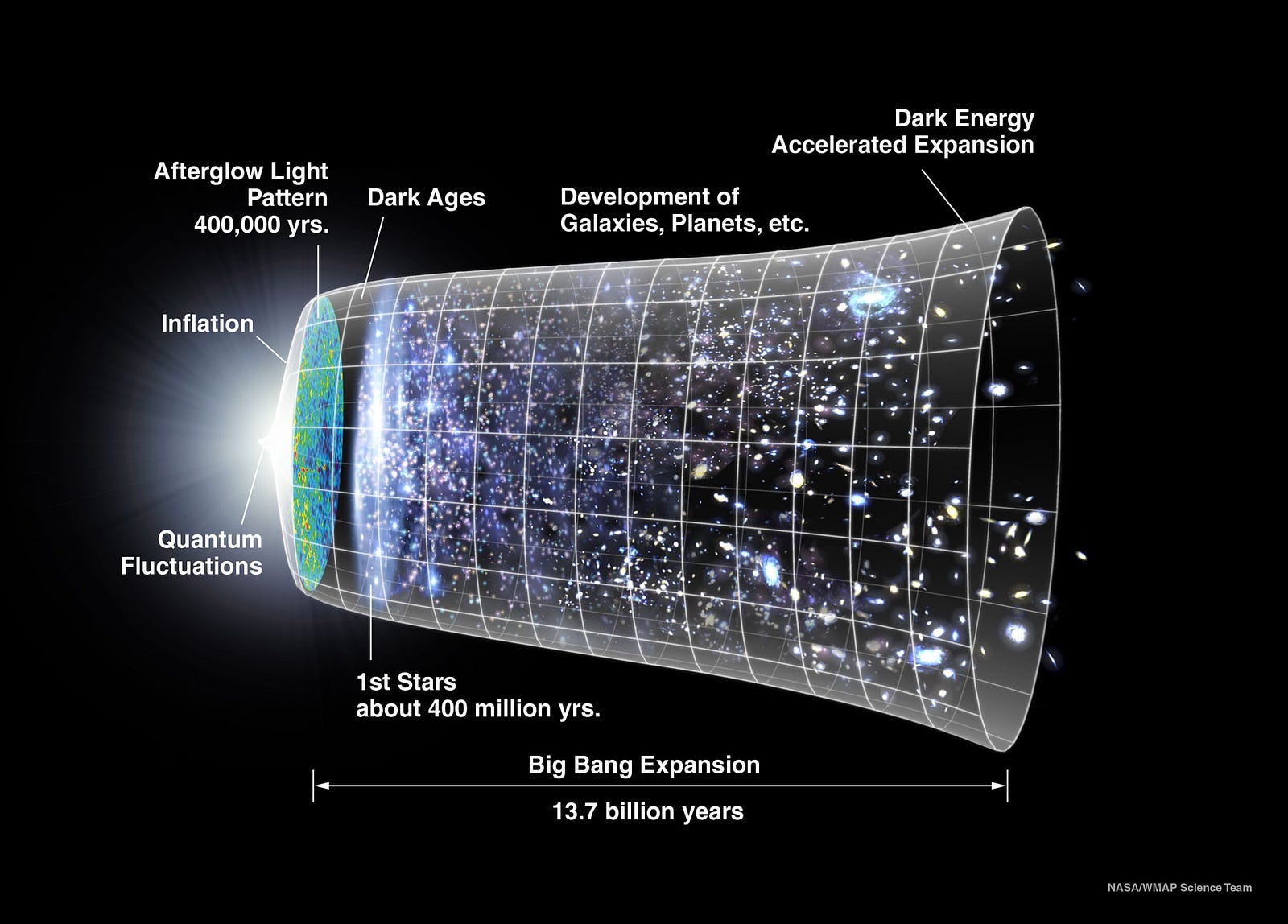
The Big Bang
In 1922, Russian mathematician Alexander Friedmann proposed on theoretical grounds that the universe is expanding, which was derived independently and observationally confirmed soon afterwards by Belgian astronomer and Catholic priest Georges Lemaître in 1927. Lemaître also proposed what became known as the "Big Bang theory" of the creation of the universe, originally calling it the "hypothesis of the primeval atom," in his paper Annales de la Société Scientifique de Bruxelles (Annals of the Scientific Society of Brussels) under the title "Un Univers homogène de masse constante et de rayon croissant rendant compte de la vitesse radiale des nébuleuses extragalactiques" ("A homogeneous Universe of constant mass and growing radius accounting for the radial velocity of extragalactic nebulae"), he presented his new idea that the universe is expanding and provided the first observational estimation of what is known as the Hubble constant. What later will be known as the "Big Bang theory" of the origin of the universe, he called his "hypothesis of the primeval atom" or the "Cosmic Egg".
American astronomer Edwin Hubble observed that the distances to faraway galaxies were strongly correlated with their redshifts. This was interpreted to mean that all distant galaxies and clusters are receding away from our vantage point with an apparent velocity proportional to their distance: that is, the farther they are, the faster they move away from us, regardless of direction.

In 1964, two AT&T scientists, Arno Penzias(R) and Robert Wilson(L), were studying radio waves using a shoehorn radio wave detector aimed into deep space, when they noticed an anomaly, back ground radiation, with no discernible cause, radiating in all directions. It was at that moment that "The Big Bang Theory" was proven, because that is exactly what scientist had predicted would happen if the theory were true.

All of Sheldon's research into String Theory and Dark Matter is derived from Edgar Allan Poe's Eureka Moment!
The Raven
Did you know that originally Poe intended his poem to be called The Parrot but felt, quite rightly, that choice betrayed the solemnity of his poem. Then he happily learned that Raven could mimic human speech too.

Once upon a midnight dreary, while I pondered, weak and weary,
Over many a quaint and curious volume of forgotten lore—
While I nodded, nearly napping, suddenly there came a tapping,
As of some one gently rapping, rapping at my chamber door.
“’Tis some visitor,” I muttered, “tapping at my chamber door—
Only this and nothing more.”
Ah, distinctly I remember it was in the bleak December;
And each separate dying ember wrought its ghost upon the floor.
Eagerly I wished the morrow;—vainly I had sought to borrow
From my books surcease of sorrow—sorrow for the lost Lenore—
For the rare and radiant maiden whom the angels name Lenore—
Nameless here for evermore.
And the silken, sad, uncertain rustling of each purple curtain
Thrilled me—filled me with fantastic terrors never felt before;
So that now, to still the beating of my heart, I stood repeating
“’Tis some visitor entreating entrance at my chamber door—
Some late visitor entreating entrance at my chamber door;—
This it is and nothing more.”
Presently my soul grew stronger; hesitating then no longer,
“Sir,” said I, “or Madam, truly your forgiveness I implore;
But the fact is I was napping, and so gently you came rapping,
And so faintly you came tapping, tapping at my chamber door,
That I scarce was sure I heard you”—here I opened wide the door;—
Darkness there and nothing more.
Deep into that darkness peering, long I stood there wondering, fearing,
Doubting, dreaming dreams no mortal ever dared to dream before;
But the silence was unbroken, and the stillness gave no token,
And the only word there spoken was the whispered word, “Lenore?”
This I whispered, and an echo murmured back the word, “Lenore!”—
Merely this and nothing more.
Back into the chamber turning, all my soul within me burning,
Soon again I heard a tapping somewhat louder than before.
“Surely,” said I, “surely that is something at my window lattice;
Let me see, then, what thereat is, and this mystery explore—
Let my heart be still a moment and this mystery explore;—
’Tis the wind and nothing more!”
Open here I flung the shutter, when, with many a flirt and flutter,
In there stepped a stately Raven of the saintly days of yore;
Not the least obeisance made he; not a minute stopped or stayed he;
But, with mien of lord or lady, perched above my chamber door—
Perched upon a bust of Pallas just above my chamber door—
Perched, and sat, and nothing more.
Then this ebony bird beguiling my sad fancy into smiling,
By the grave and stern decorum of the countenance it wore,
“Though thy crest be shorn and shaven, thou,” I said, “art sure no craven,
Ghastly grim and ancient Raven wandering from the Nightly shore—
Tell me what thy lordly name is on the Night’s Plutonian shore!”
Quoth the Raven “Nevermore.”
Much I marvelled this ungainly fowl to hear discourse so plainly,
Though its answer little meaning—little relevancy bore;
For we cannot help agreeing that no living human being
Ever yet was blessed with seeing bird above his chamber door—
Bird or beast upon the sculptured bust above his chamber door,
With such name as “Nevermore.”
But the Raven, sitting lonely on the placid bust, spoke only
That one word, as if his soul in that one word he did outpour.
Nothing farther then he uttered—not a feather then he fluttered—
Till I scarcely more than muttered “Other friends have flown before—
On the morrow he will leave me, as my Hopes have flown before.”
Then the bird said “Nevermore.”
Startled at the stillness broken by reply so aptly spoken,
“Doubtless,” said I, “what it utters is its only stock and store
Caught from some unhappy master whom unmerciful Disaster
Followed fast and followed faster till his songs one burden bore—
Till the dirges of his Hope that melancholy burden bore
Of ‘Never—nevermore’.”
But the Raven still beguiling all my fancy into smiling,
Straight I wheeled a cushioned seat in front of bird, and bust and door;
Then, upon the velvet sinking, I betook myself to linking
Fancy unto fancy, thinking what this ominous bird of yore—
What this grim, ungainly, ghastly, gaunt, and ominous bird of yore
Meant in croaking “Nevermore.”
This I sat engaged in guessing, but no syllable expressing
To the fowl whose fiery eyes now burned into my bosom’s core;
This and more I sat divining, with my head at ease reclining
On the cushion’s velvet lining that the lamp-light gloated o’er,
But whose velvet-violet lining with the lamp-light gloating o’er,
She shall press, ah, nevermore!
Then, methought, the air grew denser, perfumed from an unseen censer
Swung by Seraphim whose foot-falls tinkled on the tufted floor.
“Wretch,” I cried, “thy God hath lent thee—by these angels he hath sent thee
Respite—respite and nepenthe from thy memories of Lenore;
Quaff, oh quaff this kind nepenthe and forget this lost Lenore!”
Quoth the Raven “Nevermore.”
“Prophet!” said I, “thing of evil!—prophet still, if bird or devil!—
Whether Tempter sent, or whether tempest tossed thee here ashore,
Desolate yet all undaunted, on this desert land enchanted—
On this home by Horror haunted—tell me truly, I implore—
Is there—is there balm in Gilead?—tell me—tell me, I implore!”
Quoth the Raven “Nevermore.”
“Prophet!” said I, “thing of evil!—prophet still, if bird or devil!
By that Heaven that bends above us—by that God we both adore—
Tell this soul with sorrow laden if, within the distant Aidenn,
It shall clasp a sainted maiden whom the angels name Lenore—
Clasp a rare and radiant maiden whom the angels name Lenore.”
Quoth the Raven “Nevermore.”
“Be that word our sign of parting, bird or fiend!” I shrieked, upstarting—
“Get thee back into the tempest and the Night’s Plutonian shore!
Leave no black plume as a token of that lie thy soul hath spoken!
Leave my loneliness unbroken!—quit the bust above my door!
Take thy beak from out my heart, and take thy form from off my door!”
Quoth the Raven “Nevermore.”
And the Raven, never flitting, still is sitting, still is sitting
On the pallid bust of Pallas just above my chamber door;
And his eyes have all the seeming of a demon’s that is dreaming,
And the lamp-light o’er him streaming throws his shadow on the floor;
And my soul from out that shadow that lies floating on the floor
Shall be lifted—nevermore!
But that is nothing compared to this story by Edgar Allan Poe, Rod Serling would say Wow.
The Narrative of Arthur Gordon Pym of Nantucket by Edgar Allan Poe (1838)

Before we proceed, this is the "grave" of 17-year-old Richard Parker. He was part of the crew of a small yacht, the Mignonette, which sailed from England to Sydney Australia in 1884. The boat was far too small for such a long journey. A storm hit and the yacht sank, a 1000 miles off the coast of Argentina, the four man crew included Dudley the Captain, Stephens the 1st Mate, Brooks a Sailor and Richard Parker the Cabin Boy made it to the lifeboat, with hardly any provisions. One can of Turnips lasted only hours, a turtle the caught a few days. After 8 days of starving, the men realized they were in danger of starving to death. They had no fresh water. Parker, the youngest of the crew became delirious with thirst and tried to drink seawater, the salt from which only made matters worse. At this point the men, were pushed far beyond human endurance. They made the decision that on man would have to sacrifice himself for his other crew mates. Since Richard Parker was in by far the worst shape, delirious and irrational, the men decided he would have to sacrifice himself as their only source of food, so they could live.
The remaining men were rescued on the 24th day after the sinking, but were arrested and put on trial. Charged with murder, Dudley and Stephens, they were in command and were found guilty of murder and sentenced to hang, on appeal this was effectively changed the sentence to manslaughter and the men were given 6 months sentences.
Townspeople paid for this cenotaph for the young boy "lost at sea".
In 1838, Edgar Allan Poe published his only full length novel, "The Narrative of Arthur Gordon Pym of Nantucket." A ship called Grampus is sinking, they have lost all provisions, no food or water. They four man crew manage to catch a tortoise and strip off its shell which provides sustenance lasting a few days. But they reach the point where the crew must draw lots to figure out which of them will be sacrificed to provide food for the rest. The death straw goes to a young ship hand named Richard Parker, who is promptly killed, sustaining them all, barely, until they are rescued.

The Cenotaph of Richard Parker (1867-1884) a victim of cannibalism at sea, echoing the Edgar Allan Poe story The Narrative of Gordon Pym written in 1838, which included the story of shipwrecked sailors surviving on a dinghy, forced to eat one of their fellow crewman, their youngest companion, teenager Richard Parker.

SS Titanic on her maiden voyage

The photo up top was taken by the chief steward of the German ocean liner SS Prinz Adalbert on April 15, 1912. The Prinz Adalbert was sailing off the coast of Newfoundland near the last reported position of the Titanic before she sank on April 14th. What drew the steward's attention to this iceberg was its base, just above sea level, which had a long deep red streak on its side at the water line. This was before he knew anything about the Titanic sinking.
In 1898, author Morgan Robertson wrote a book titled "Futility"
Both of the ships were triple screw (propeller) ships.
Both the Titan and the Titanic were described as being "unsinkable" The Titan was the largest craft afloat and the greatest ship ever built to date, having 800 feet, displacing 75,000 tons, up from 45,000 in the 1898 edition...
Both the fictional ship the Titan and the Titanic had a shortage of lifeboats
- The Titanic carried 16 lifeboats, plus 4 Engelhardt folding lifeboats, which was less than the required for the crew and passenger capacity of 3000.
- According to the book, the Titan carried "as few as the law allowed", 24 lifeboats, which could carry less than half of her total complement of 3000.
Both ships struck an iceberg
- The titanic struck the iceberg moving at 22½ knots on the starboard side on the night of April 14, 1912, in the North Atlantic, 400 nautical miles (740 km; 460 mi) away from Newfoundland.
- The titan also struck an iceberg moving at 25 knots, curiously also on the starboard side on an April night in the North Atlantic, 400 nautical miles (740 km; 460 mi) from Newfoundland.
Both ships sank, even though they were described as unsinkable.
- The Titanic sank, and more than half of her 2200 passengers and crew died.
- The Titan also sank, and more than half of her 2500 passengers drowned.
The Titan and the Titanic were both 400 miles from Newfoundland! Robertson did have a talent of predicting the future as he also predicted another real-life event. Robertson is also credited with predicting the Japanese attack on Pearl Harbor in World War II in his novel 1914 "Beyond the spectrum."
Morgan Robertson wrote another short story in 1914, in a volume that also contained a new version of Futility, Robertson included a short story called "Beyond the Spectrum", which described a future war between the United States and the Empire of Japan. Japan does not declare war but instead launches sneak attacks on United States ships en route to the Philippines and Hawaii; an invasion fleet about to launch a surprise attack on San Francisco is stopped by the hero using the weapon from a captured Japanese vessel. The title refers to an ultraviolet searchlight used by the Japanese, but invented by the Americans, to blind American crews.
On December 7th 1941, the Japanese launched a surprise attack on the United States without declaring war at Pearl Harbor. Much like they did against Russia at Port Arthur in 1905, starting the Russo-Japanese War which Japan won.


Hard to tell if Morgan Robertson was a 2nd Nostradamus or simply paying attention.

Just read about Jim Fowler just passed away. Our generation was blessed with Jacques Cousteau in our oceans, Jane Goodall in our jungles, Carl Sagan in space, Rod Serling in our imagination, Marlin Perkins and Jim Fowler leading us into the outback. We were a lucky generation. Less so now... Jane Goodall take care of yourself.

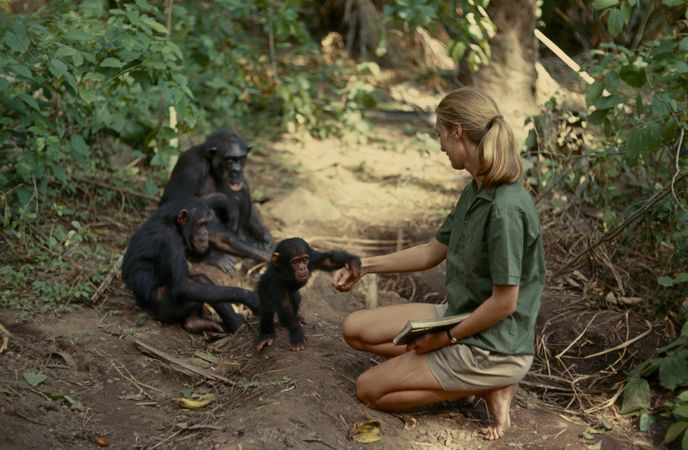
1962 Jane Goodall with her best friends

1992, Jane Goodall still with her best friends.
The Rockford Files and The Munsters

Remembering
James Garner, whose one rule, repeated by many who knew him, don’t make up your
mind up about friendship with anyone based on how they treat you, they may have an Angle,
decide based on how they treat the people who can do nothing for you/them. Jim would watch how
you treated waitresses, waiters, car and bell hops, even the paper boy, before deciding if
he wanted to be your friend. Jim was incredibly popular in Hollywood. His Cherokee
Productions kept the same employees for the 25 years Rockford was on the air. When he
auditioned Joe “Santos” Minieri for the role of Sergeant Dennis Becker, Jim
liked Joe Immediately,
the job was his.Jim had worked with Stuart Margolin on his previous show Nichols in 1970.


I have a History Degree and love researching things. I was watching The Rockford Files/Queen of
Peru, which had dialogue which I thought was quintessentially Jim. I went to IMDb to cut and paste it, but they didn't have it, so I transcribed it myself. Then I stumbled across one of those stories which seem to come out of nowhere. In the episode young actor Michael Morgan played Sean Wronko. I recognized him from other shows on TV, but I didn't know his real story.

Well, I did some digging and surprised to discover the fact that Michael Morgan was the son of Yvonne "Lily Munster" De Carlo and was born on October 29, 1959. I remembered seeing him on episodes of Little House on the Prairie, CHIPS, etc. Michael was a soft spoken, gentle, intelligent young actor. Watching Rockford's Queen of Peru prompted me to find out what happened to him. Horrifically, I was shocked to find out Michael was murdered, suffering a beating which caused a cerebral hemorrhage, on February 15, 1999.A case, which Larry Wilcox of CHIPS indicates remains unsolved. As if that wasn't enough, his brother Bruce, worked in the Twin Towers and was killed on 9/11. There is a footnote to this story. Apparently, the 9/11 story may have been attributed to Michael Murphy's family.
Michael Morgan, who played Alex in today's CHiPs episode on MeTV (The Best of Families) is the son of Yvonne DeCarlo, beloved for her role as Lily Munster. Sadly, he was murdered in 1999 at at age of 39. Police have yet to solve the case. Just as sad, his on screen brother in the episode, Timothy Patrick Murphy, died of AIDs in 1988 at the age of 29. His brother, Patrick Sean was killed a few years later in the 9/11 attacks. He worked in the World Trade Center---Sue https://www.facebook.com/Wilcox7M3/posts/10152664299518450
As if that wasn't enough, her husband stuntman Bob Morgan, was seriously injured while filming How The West Was Won(1962). Bob lost a leg and sight in one eye. Yvonne took the role of Lily Munster to help pay Bob's medical bills.
If you are near someone you love, more so if you are not, give them a call or hug, you could lose them in a heartbeat.

Yvonne De Carlo with Al Lewis who played Grandpa, Butch Patrick as son Eddie and Fred Gwynne as Herman Munster. After filming "My Cousin Vinny," Fred Gwynne worked in his Maryland garden, when his little girl heard Fred chasing a mole away using rather colorful language. A few months later, he was talking at dinner with his wife and daughter, saying he was getting a mole on his nose, one look at his daughter gave birth to a writer of children's books.


.jpg)
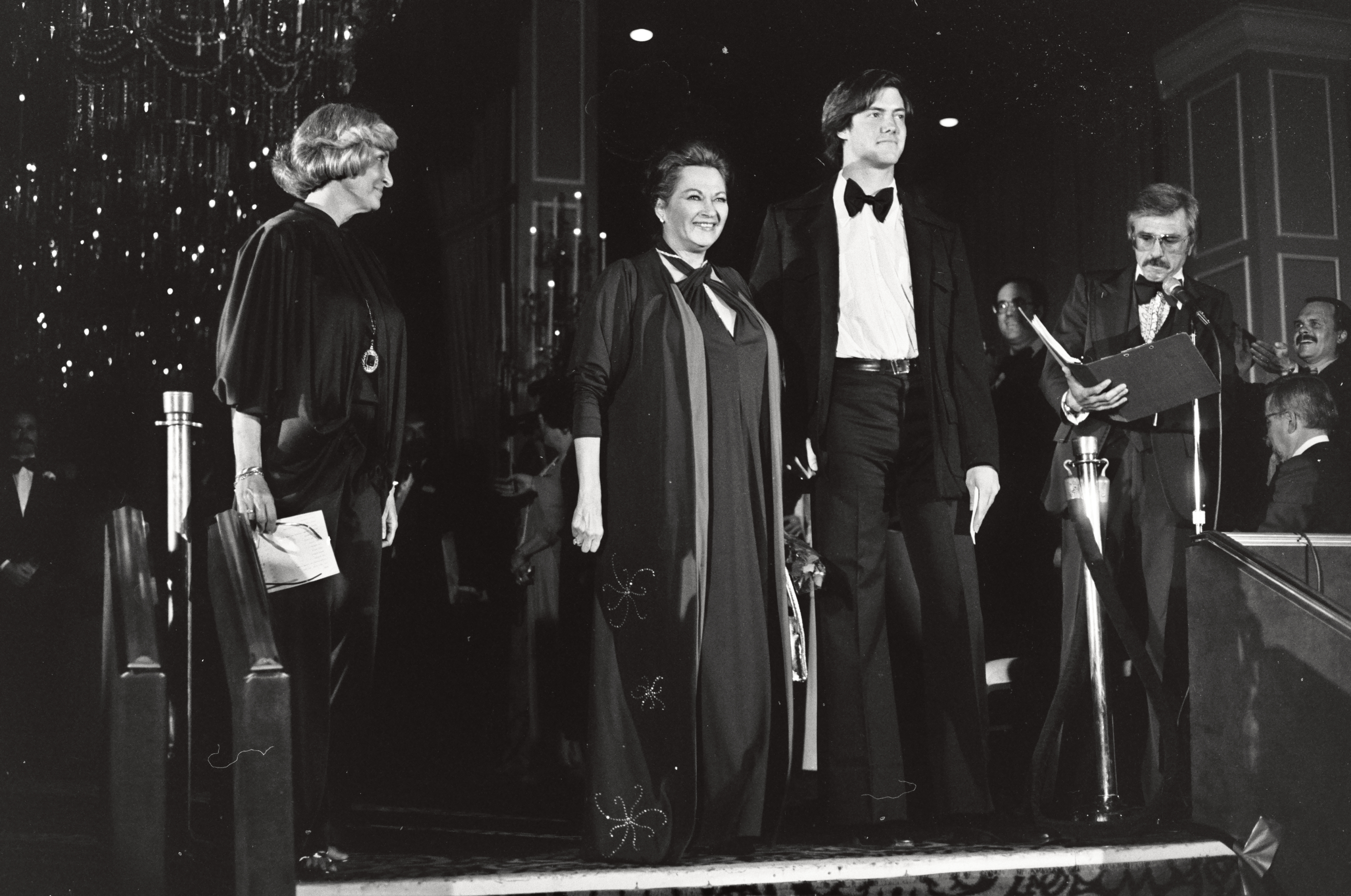

Michael in one of his first acting jobs, with Howard Cosell in an episode of Jack Klugman/Tony Randall's "The Odd Couple"(1972)

Margaret Yvonne Middleton was born in Vancouver, British Columbia, Canada, September 1, 1922 – January 8, 2007 dying of a stroke; Yvonne and Bob Morgan were married from November 21, 1955 until 1974.

Requiescat in pacem, pal. Michael Morgan 1959-1999
Princess Diana said she had a debt as a child who was bullied when she was young to help other kids. Diana was shy and gentle, her parents had a vicious divorce which only made things worse. At boarding school, she was the number one target of school bullies. Diana said it taught her what her mission in life should be, she became a school teacher. There weren't and aren't many millionaire school teachers, but Diana was one of them. Diana said that bullies most often target the gentlest among us. She said it is our duty when we see a kid like Michael Morgan, to mentor them so that they will have a long, meaningful, happy life. If you choose to follow her path, do it in memory of Diana and Michael.


