Wednesday, June 26, 2013

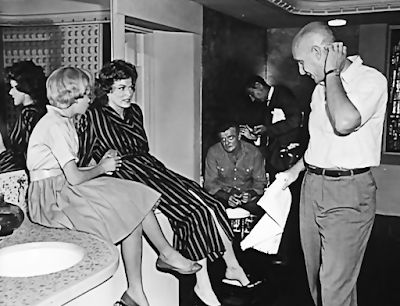
Maureen O'Hara and Brian Keith in the Parent Trap (1961) Christopher Walken, Nancy Kulp and the Beverly Hillbillies, Brian Keith

The Parent Trap
There is a very famous, true story about Maureen Fitzsimmons O'Hara and Brian Keith: after their parents got divorced, Desi Arnaz and Lucille Ball's children, Little Lucy and Little Desi, made their parents take them to see "The Parent Trap" at least ten times; separately of course. They had a very bitter divorce. Lucy said she enjoyed the movie the first few times she saw it, and it is a wonderful movie, but even she had her fill of it. Lucy would change the channel anytime she ran across it on TV. Fortunately, she and Desi also figured out what was going on in their children's heads. For the first time since their divorce, Lucy and Desi, first with each other, and then together with their children, sat down to talk about their divorce. It was very painful for Desi and Lucy to see how hurt their children were.
Lucy once said, that it was at that moment that both she and Desi realized how much their children must have been hurting and decided after an acrimonious beginning, they were going to work very hard to have a friendly divorce. Lucy is quoted on her death bed as having said that Desi was one of the best friends she ever had in her entire life. I was so glad to hear that. Most people may not realize this, but the movie "The Parent Trap" and the explosion in the divorce happened at almost the same time. This movie changed people's lives and perceptions for the better. It is Ms. O'Hara's wonderful, convincing performance in "The Parent Trap", along with Brian Keith's, that I consider their best. "The Parent Trap" is very personal to me because my parents had a very nasty divorce at exactly the same time "The Parent Trap" came out. I always "joke" that there were no survivors after my parents divorce. The tragedy of it is that I was only half joking.
I always wished that I had had parents like Maureen O'Hara and Brian Keith. As a child, this thought would always comfort me, and gave me a goal as to what kind of parent I wanted to be. A close friend of Ms. O'Hara said on the A&E Biography that that movie was closest to the real person she was and is; but I already knew that. To change people's lives for the better, and to give others a refuge from unhappiness: for this no one can thank you enough.

Thank You, Maureen O'Hara; and Thank you, Brian Keith.

Brian Keith O'Hara
That really is my name...


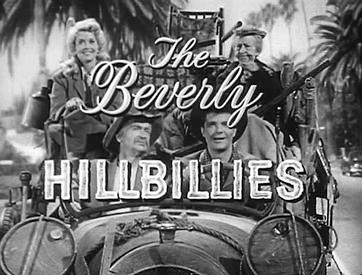
Speaking of The Parent Trap, Beverly Hillbillies Mrs. Jane Hathaway/Nancy Kulp appeared as a camp counselor.


In case you wondered, Haley Mills played opposite Susan Henning, when the camera was filming from behind. Walt Disney gave her an award for her thankless role. I agree, integral to the movie, which no one knew. 


Haley using a split screen process, where she does play both roles.


One of Brian Keith's best roles as Teddy Roosevelt in Sean Connery/Michael Caine's "The Wind and the Lion" (1976). Brian was every bit as memorable as the two leads. Pictured below with director John "The Maltese Falcon" Houston as Secretary of State John Hay. 


Brian's 8-year-old son came down with a fever, within a few hours Michael was far worse, so mom and dad raced him to the hospital. Before morning Brian's son was dead. Everyone said it broke his heart and he cried without stopping for weeks missing several acting jobs as a result.


Brian made a family show, "Family Affair" which ran until 1971. He became very close to Anissa Jones, who played "Buffy". She came from a broken home, with a domineering mother and an absentee father. When the show went off the air, Brian was given his own show, The Brian Keith Show about a Pediatric Doctor in Hawaii. Brian offered Anissa a role as a nurse if she wanted it, but Anissa was enjoying being a normal kid too much to want to go back to acting. 


The best chapter of the great miniseries "Centennial" (1978) was the 1880's murder by the grifing Wendell family, Anthony Zerbe, Lois Nettleton and Doug McKeon, all of whom were magnificent, of one of their blackmail victims. Mrs. Wendell would seduce their victim, then Zerbe/Mr. Wendall would catch them in the act. This time their victim fought back and was killed. The murder was solved by Sheriff Dumire/Brian Keith, who was every bit as convincing, who was later murdered. In some of the best acting I've ever seen, Sheriff Dumire/Brian Keith engages in verbal fencing with 10-year-old Doug McKeon to ascertain what happened to their last victim, who the family accidentally killed. It should be noted that Anthony Zerbe, one of the best actors in TV history, usually playing brilliant criminals, is as good as an incompetent criminal. It was up to David Janssen, Andy Griffith and Robert Vaughn to bring justice in the case, 100 years later. This is long before the wonderful Lois Nettleton walked in on George Costanza picking a half eaten éclair out of the trash and finishing it off.


Why I haven't watched the Beverly Hillbillies since the early 1970's.   

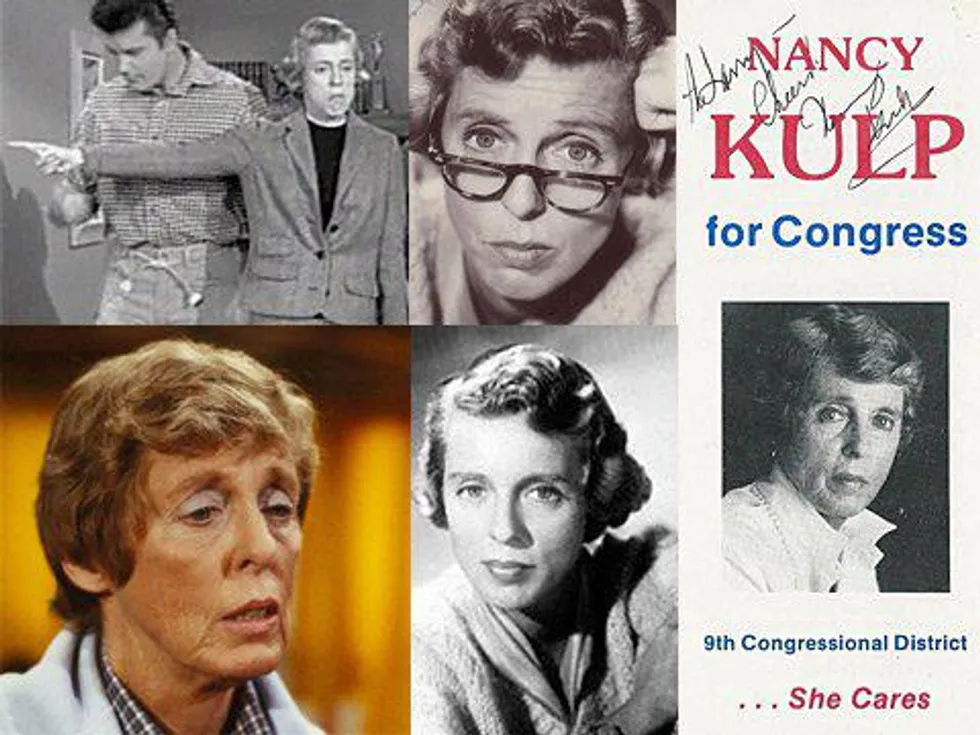
I will never forget when I turned against the Beverly Hillbillies and later Barnaby Jones. Nancy Kulp/Miss Jane Hathaway ran for Congress from Pennsylvania. She was asked by reporters how her former castmates reacted to her candidacy. She said they were surprised and wished her well. She did NOT say they endorsed her. Buddy Ebsen showed what a petty person he is and made a commercial for her opponent viciously attacking Nancy. Nothing Nancy said was offensive, even, as in the case of Buddy, if he was a Republican and Nancy was a Democrat. I, a Democrat, had a friend of mine run as a Republican for some minor political office. I told them I wish you well, but he pressed me as to whether I would vote for him. I told him I wasn't in his district. At this point he was intrigued and wanted to know if I would vote for him if we were in the same district, so I said which would you rather, I tell you the truth or tell you what you want to hear? He said tell me what I want to hear. I said, I really, really, really wish you well. We both laughed. Nancy said Buddy's commercial hurt her. It would have hurt me too, after working together for 10 years. My loyalty and respect for people I work with runs far deeper than Buddy's obviously. I no longer laughed at Buddy Ebsen, Beverly Hillbillies and had no interest in Barnaby Jones. after his vicious commercial.


Another footnote: I remember one of Jethro Bodine's schoolmates in prep school Armstrong Dueser McHugh III was played by Michel Petit. I saw him being interviewed on Merv Griffin/Mike Douglas and was fascinated to find out he spoke with a French accent and was from Belgium. Just as a kid my own age, it impressed me, that acting he sounded 100% American but in real life had a heavy French accent. 


I read an interview of Christopher Walken who explained his odd speaking cadence and timbre came from growing up in Brooklyn where his family had a bakery. Chris's family were Germans, but his neighborhood, had Irish brogues, Jewish emigres, Hungarians, Poles, Germans, Scots and Russians. He had to be somewhat fluent in all those languages and he would hesitate in speaking to make sure he was using the right words in the right context. I posted this on his Facebook page and he gave me a thumbs up. Right back at you Chris! 


To help his family out, he took acting jobs. Chris is very smart and soon made a favorable impression on casting directors, many of whom found his odd speaking pattern charming. 


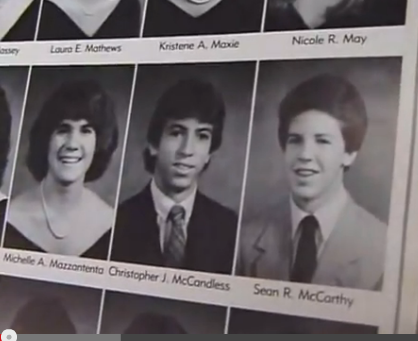
Chris's High School Yearbook, yes, his first name is Ronald, but he decided Christopher/Chris sounded better. 


Sunday, June 2, 2013

Audrey Hepburn was a Great and Good Woman


Audrey Hepburn grew up in Arnhem during the Nazi occupation of the Netherlands in World War II. Though her mother was the Baroness Ella van Heemstra, her family nearly starved to death during the war.  Her uncle was tortured and murdered by the Nazis. Her brother was repeatedly beaten and tortured as well. After her immensely successful career in Hollywood, Audrey dedicated the last years of her life to UNICEF. During her travels through some of the most impoverished areas of the world her entourage constantly warned her against hugging and holding the sick and dying, including AIDS, Malaria and Cholera patients. She ignored those warnings. Like Princess Diana she knew what was right and actually believed in what she said.

 
When interviewed by Phil Donahue, she spoke of meeting a little girl in sub-Saharan Africa who knew of the tradition of presenting a bouquet of flowers to important guests. Unfortunately, the only growing thing in the semi-arid desert in which she lived was weeds. She proudly presented Audrey a bouquet of weeds. Audrey had a photograph of that gift framed and had it hung on her living room wall.
Phil also asked her if she harbored any ill will against Germans considering her wartime experiences. She said no, the war was over and ended as it should. Germany had returned to the right course and she had visited the country without fear or trepidation.


It may strike some people as odd, but when I think of Princess Diana I think of Rudyard Kipling's poem, "If", written for his son Jack.  It seems to me, that logic dictates that this wonderful poem should apply equally to boys or girls. And it certainly applies to everyone in this post.


If by Rudyard Kipling 
 
 
If you can talk with crowds and keep your virtue,
Or walk with Kings—nor lose the common touch,
If neither foes nor loving friends can hurt you,
If all men count with you, but none too much;
If you can fill the unforgiving minute
With sixty seconds’ worth of distance run,
Yours is the Earth and everything that’s in it,
And—which is more—you’ll be a man, my son!

Rudyard Kipling Nobel Prize Winner in Literature


Jack Kipling, to whom the poem was dedicated by his father, is third from right in the back row at St. Aubyn's School in Sussex, England(1909).
 
And again, second from right, middle row. http://www.kiplingsocietyaustralia.com/newsletter_frame04.php
 
Jack Kipling, in a photo taken right before the Battle of Loos(1915), WWI. Jack had originally been turned down for service because of his extreme nearsightedness. Jack begged his father to pull strings so he could fight in the war.  He was killed six weeks after enlisting. His grave has never been found.
 

Tuesday, May 14, 2013

The Most Eloquent Explanation of Chris McCandless


Chris's Class Photo  High School in Virginia

Watch both parts of this documentary about Chris as seen through the eyes of Sean Penn and Jon Krakauer. Fascinating and gives you a real sense of who they are and Chris was.

http://www.youtube.com/watch?v=x9tjqblawHA


http://www.youtube.com/watch?v=ZOXBi8SvJqY

Wednesday, May 8, 2013

Lawrence of Arabia and the Wreck which Killed them.


Selim and Lawrence, alone together. 

The Two boys who were riding on a rural English Road when TE Lawrence came upon them on his motorcycle, he swerved and wrecked. He died almost immediately. 
A train wreck which Lawrence of Arabia and his band were responsible for. 
Who was Lawrence of Arabia?
“He was born a double agent. He loved deceptions, puzzles, and disguises. But so did others in the England of his time. All his life Lawrence told tales, passing off his inventions or exaggerations as the truth. In fabricating stories, Lawrence cheated as a child cheat, with no essential dishonesty, meaning no harm, but passionately desiring the attention and recognition that the achievements bragged of will bring. Perpetual boyhood was a theme that ran strongly through the British imagination in his time (and afterwards). It found its full expression in Barrie’s Peter Pan, which appeared in 1904 when Lawrence was in his teens.
Mrs. George Bernard Shaw, a confidante of Lawrence’s to whom he confessed much that was false, once exclaimed in exasperation that ‘He is such an infernal liar!’; but her husband disagreed. ‘T.E. was a born an incorrigible actor,’ wrote Shaw. ‘He was not a liar. He was an actor.”
At first even Thomas questioned the farfetched tales that Lawrence told him, but (according to Thomas), “T.E. would laugh with glee and reply, ‘History isn’t made up of truth, anyhow, so why worry?’” Later Lawrence would remark “on the whole I prefer lies to truth particularly where they concern me.” Lawrence claimed that the fictions he passed off as accounts of his adventures satisfied his craving for self – expression in some imaginative form: when some friend objected, he countered with “What does it matter? History is but a series of accepted lies.”
Bernard Shaw wrote that “through an accident in his teens Lawrence never grew up. He looked like a boy. His great abilities and interests were those of a highly gifted boy. He died, not as a great thinker, but as a boy tearing along at 80 miles an hour.” Only a fine line separates an existentialist hero from what the London Press has taken to calling “a crazy, mixed up kid”, and T.E. was so much of his Century that he could be said to be on either side of the line.
It was his special quality: he does not age or date. He belongs to today. Even his theory of strategy is as current as this morning’s headlines. He had a genius for taking the road we would like to follow. His attitudes and interests anticipated those of the 1960’s the 1970’s the 1980’s the 1990’s: and so did his style. He was casual. He was cool. He never stopped being young. He shared the modern crazes: Motorbikes, speed: celebrity.
It is as a voice of our time that he is certain to be heard. As other men lust for power or wealth or woman, he craved to be noticed and to be remembered and he was and he is, and he will be.”
David Fromkin on TE Lawrence